The semester is coming to an end, including my Literature and Learning III class. Over this semester, I learned about, and was able to use, various different literacy tasks, such as over the shoulder miscue analysis, writing assessments, and instructional conversations, that furthered my understanding of teaching literature in the classroom as well as helping my students develop a better understanding of literature. Teaching literacy in the classroom is not just reading books to the whole class, having independent reading, and giving mini-lessons, although those are important aspects to literacy. Literacy involves deep discussions between students and the teacher, and it MUST be meaningful to them. It also requires a LOT of planning.
At the beginning of the year I was asked to write out my teaching beliefs, explaining why I thought these were important beliefs to have. I remember saying that having a holistic and student-led learning environment was important, as well as believing that all students are capable learners and that the best way to further learning is to read, read, read!! I definitely still believe these to be important aspects of my teaching beliefs, but now that I've been in a practicum class and taken my Literature and Learning III course, I have a better understanding of what it takes to carry out teaching practices and beliefs. For example, student-led discussions, especially for younger ages, is very difficult to start if students are not used to having an open discussion with their peers. Before doing my instructional conversation, I had thought that I was having meaningful student-led discussions, but after reading about instructional conversations and analyzing the talk I was currently having in my small group, I was so surprised how much I was leading the conversation and I noticed a great disconnect between students discussion with their peers. After careful planning and taking a step back away from the discussion, my students were able to successfully have a natural and flowing discussion about the text I read to them. It was amazing to see the difference.
Other beliefs, such as knowing that all students can be learners and that reading furthers learning, have strengthened over the course of this semester. All students are learners! I can't repeat that enough. Some students may grasp a concept sooner than others, and some may take a lot of time and practice to master a skill or topic, but students are all capable if they are given the right instruction and motivation. With anything a teacher does, students' interests should play a huge role in the modification of lessons. By incorporating their interests into the curriculum, you have a better chance at getting their attention and a higher chance that the topic being taught will resonant in their minds. Also, incorporating books and various readings into other subjects is a great way to get students to be engaged in reading. Get your students to read (and write) as much as possible. Switch up the book selection in your classroom library or organize your library in a way that gets students engaged.
Overall, this blog has helped me reflect and talk on and on about different aspects of teaching literature to a classroom. I feel like I have developed many techniques and methods to teaching and assessing students in the classroom.
Wednesday, May 7, 2014

Sunday, April 27, 2014
Technology in the Classroom
Technology has become integrated into
almost everything we do as a society, such as how we communicate, search for
information, do business transactions, and now, teach students. Because our
society relies so heavily on technology, students who are growing up during
this time are becoming more dependent on using technology on a regular basis.
There are both pros and cons to using technology in the classroom, but overall
I believe that having technology in the classroom not only helps students learn
how to use technology that they may need to know how to use in the "real
world," but it also keeps them engaged during class.
Technology can be improve student learning by taking an average lesson and making it engaging for the students. Devices such as IPads, SMART Boards, computers, etc. keep students engaged by allowing them to combine school work with games and activities that can be accessed on such devices. For example, if a student is learning about the different functions of the human body, the IPad has different applications that let the students explore the different features using a virtual tour of the human body. Students are likely to be much more engaged with a virtual tour which they can explore independently, than if they were just reading the information they needed to learn out of a book.
Although technology has many benefits to student learning, challenges arise when costs become a factor and when the teacher needs to make sure that students are using technology for educational purposes and not goofing around. I would say that costs are a huge factor when trying to incorporate technology into the classroom. Not all schools are able to afford giving IPads to students/classrooms, and setting up SMART boards in every classroom. Also, making sure that students are keeping on task may be a challenge too. A student may decide that they want to use the IPad, but instead of looking at the app that is related to the class topic, they may try to play games instead. It is important for teachers to make a set of rules with their students about what is expected out of them when using these devices and also making sure that all the applications on the device are educational.
I think that technology can be important to student learning, but it shouldn't be incorporated into every aspect of teaching. It is important for teachers to show that technology doesn't need to be used to make a topic or activity fun. Students still need to learn how to do tasks without the use of technology, or they will end up being more reliant on technology than their own ability to figure something out.
Technology can be improve student learning by taking an average lesson and making it engaging for the students. Devices such as IPads, SMART Boards, computers, etc. keep students engaged by allowing them to combine school work with games and activities that can be accessed on such devices. For example, if a student is learning about the different functions of the human body, the IPad has different applications that let the students explore the different features using a virtual tour of the human body. Students are likely to be much more engaged with a virtual tour which they can explore independently, than if they were just reading the information they needed to learn out of a book.
Although technology has many benefits to student learning, challenges arise when costs become a factor and when the teacher needs to make sure that students are using technology for educational purposes and not goofing around. I would say that costs are a huge factor when trying to incorporate technology into the classroom. Not all schools are able to afford giving IPads to students/classrooms, and setting up SMART boards in every classroom. Also, making sure that students are keeping on task may be a challenge too. A student may decide that they want to use the IPad, but instead of looking at the app that is related to the class topic, they may try to play games instead. It is important for teachers to make a set of rules with their students about what is expected out of them when using these devices and also making sure that all the applications on the device are educational.
I think that technology can be important to student learning, but it shouldn't be incorporated into every aspect of teaching. It is important for teachers to show that technology doesn't need to be used to make a topic or activity fun. Students still need to learn how to do tasks without the use of technology, or they will end up being more reliant on technology than their own ability to figure something out.
Saturday, April 26, 2014
Instructional Conversations: Dialogue about Rumors
Last week I setup an instructional conversation with a few of my 2nd graders. Instructional conversations, unlike other discussions in class, are student led discussions that promote thinking and learning through talk. Before actually doing one in my class, I thought it would be the exact same as the small group discussions I have already done before, but I was a little off. By a little, I mean I had no idea how much I was controlling the discussions before and how little input and reflection I was giving my students to respond. I was amazed at how much my students were willing to talk about the book we used, which was "Mr. Peabody's Apples," by Madonna (yes, the singer).

Here is a link to the book if you are interested: http://www.amazon.com/Mr-Peabodys-Apples-Madonna/dp/0670058831/ref=sr_1_1?s=books&ie=UTF8&qid=1398662689&sr=1-1&keywords=mr.+peabody%27s+apples
The book is about a boy, Tommy, who spreads a rumor about his baseball couch, Mr. Peabody. One day he sees his coach take an apple from a store without paying for it, then he runs off to tell all is friends. Eventually, the entire town hears about what Tommy saw, but that's not the whole story. This is a great book to teach students the impact of a rumor and how it affects other people, so I thought it would be perfect for my classroom, especially after some incidents that have happened over the past few weeks.
I wanted to make sure I had everything well planned before I gave the lesson, so I practiced many times, going through the lesson by myself and with my roommate. I tried to think of questions that were open-ended and furthered the discussion, so all of my talking points were "why" based questions. It allowed the students a chance to provide multiple answers for a single question rather than just having them respond to a right or wrong question. The three main questions I asked were: Why do you think Mr. Peabody asked Tommy to bring a pillow to the baseball field?, Why did Tommy tell everyone what he saw Mr. Peabody doing?, and Why is it important not to judge someone by what you see them doing?.
I was extremely surprised and proud of my students for doing the instructional conversation so well. I was nervous because when they have other classroom discussions there isn't much time spend on them talking to each other. They usually respond to a question provided by the teacher and then respond back to the teacher without really responding to their peers and building off each other's comments. They were able to connect the story to experiences they've had and also things they remember from other subjects, like Guidance.
Here is a link to the book if you are interested: http://www.amazon.com/Mr-Peabodys-Apples-Madonna/dp/0670058831/ref=sr_1_1?s=books&ie=UTF8&qid=1398662689&sr=1-1&keywords=mr.+peabody%27s+apples
The book is about a boy, Tommy, who spreads a rumor about his baseball couch, Mr. Peabody. One day he sees his coach take an apple from a store without paying for it, then he runs off to tell all is friends. Eventually, the entire town hears about what Tommy saw, but that's not the whole story. This is a great book to teach students the impact of a rumor and how it affects other people, so I thought it would be perfect for my classroom, especially after some incidents that have happened over the past few weeks.
I wanted to make sure I had everything well planned before I gave the lesson, so I practiced many times, going through the lesson by myself and with my roommate. I tried to think of questions that were open-ended and furthered the discussion, so all of my talking points were "why" based questions. It allowed the students a chance to provide multiple answers for a single question rather than just having them respond to a right or wrong question. The three main questions I asked were: Why do you think Mr. Peabody asked Tommy to bring a pillow to the baseball field?, Why did Tommy tell everyone what he saw Mr. Peabody doing?, and Why is it important not to judge someone by what you see them doing?.
I was extremely surprised and proud of my students for doing the instructional conversation so well. I was nervous because when they have other classroom discussions there isn't much time spend on them talking to each other. They usually respond to a question provided by the teacher and then respond back to the teacher without really responding to their peers and building off each other's comments. They were able to connect the story to experiences they've had and also things they remember from other subjects, like Guidance.
Saturday, April 12, 2014
Writing Fiction Stories: Beginning, Middle, and End
The other day I was working with my 2nd graders on writing the beginning, middle, and end of a fiction story. Because I'm in a practicum class and haven't been with class long enough to know what exactly my students are knowledgeable of, I randomly chose a group of students to work with during this lesson. I was surprised by the creativity of their stories and how much they already knew about writing fiction stories!
We had read the story, "The Three Little Pigs" by Bernadette Watts, the day before during whole group reading.

Beginning: Main characters, setting, and problem introduced
Middle: Problem introduced (sometimes), what the characters do in the story
End: How the problem was solved, conclusion
After our discussion, I decided to see if they could put their brains to work by getting their ideas onto paper. Their stories had to be fiction stories that had a problem and solution, at least one main character, and a setting. I also had students create a story organizer before writing the story, which helped them figure out who the characters would be, what setting they wanted, and what they wanted to include in their beginning, middle, and end. Two days later, my students handed in their work. The results were very telling about what they knew and what I needed to focus on for the next writing lesson.
My students created a range of both realistic fiction and fantasy stories that were surprisingly creative. For example, I had a student write about a classmate losing a book then creating a lost and found for her school, and I had another student write about an elephant having his trunk stolen by a giant hawk, which it eventually ended up giving the trunk back. Also, it was clear that all my students knew how to write the beginning, middle, and end of a story and knew how to incorporate a problem and solution into their stories.
My students had many strengths in their writing, but even with their strengths, one thing that I noticed in their writing was the amount of detail in a story. Most of the stories mentioned the main characters and sometimes the setting, but students didn't elaborate on what each character looked like or gave detail as to where the setting was taking place, which doesn't allow the reader to get the full effect of the story.
My students need to work on detail, so I think my next step would be to teach lessons about the importance of detail. I would focus on adjectives first and how it's important to describe characters, settings, and events in the story so that the reader can attempt to imagine what the author is trying to show. Without descriptive language, stories aren't as interesting to readers. Some of the lessons I would plan would include showing examples from books and going over the types of words used to describe the story. Activities related to comparing differences between stories with detail and without would be interesting to use as well. But, details in a story don't just have to be describing words. Often times the author can add dialogue with emotion to add more effect. For now, I think sticking with adjectives would be the best next step.
A common trend that I noticed in my students' work was their use of punctuation and phonics. Some students were using periods instead of commas or using capital letters even when the word wasn't at the beginning of the sentence or a proper noun. I could tell that they were using phonics because even though a word was spelled incorrectly, most of the time I was able to figure out what it was because they spelled it the way the word is pronounced. For example, a student wrote "thay" instead of "they," or some students left off the silent letter "e" in "little." First, let me explain that I didn't mark off for miscues like these. Because these are common miscues of 2nd graders and punctuation/spelling was not apart of my lesson, I don't see how I could possibly take off points for these miscues. I do think that punctuation and spelling are important, but not to the extent of creating meaningful pieces of work and that's what my lesson was covering. I think the best approach to these types of miscues are minilessons. Depending on the number of people making these types of miscues, minilessons could be given in whole group, small group, or individually.
Overall, I thought the lesson went well and I think I gained a lot of information about my students and their writing. It's interesting to see the various types of topics and writing conventions students come up with and use in their pieces. I liked the discussion at the beginning because students are able to brainstorm ideas, present them to their peers, which could in turn help generate more ideas from others. Also, I think small group worked well with this lesson because I was able to see where people were and where they wanted to go. I could give more attention to their work and give them feedback that would help improve their writing.
We had read the story, "The Three Little Pigs" by Bernadette Watts, the day before during whole group reading.
My kids love to end the day with a story, so I figured a fairytale was a good way to start the discussion of fiction stories and what components each section of the book has. After the book was read we talked about the sequencing of events and what the problem/solution was in the story. The next day is when I started my lesson.
The first thing we discussed was what they already knew about writing fiction stories. One student raised her hand and said there was a beginning, middle, and end (perfect start to my lesson). I had my students elaborate about what those sections were made up of and we made a list:Beginning: Main characters, setting, and problem introduced
Middle: Problem introduced (sometimes), what the characters do in the story
End: How the problem was solved, conclusion
My students created a range of both realistic fiction and fantasy stories that were surprisingly creative. For example, I had a student write about a classmate losing a book then creating a lost and found for her school, and I had another student write about an elephant having his trunk stolen by a giant hawk, which it eventually ended up giving the trunk back. Also, it was clear that all my students knew how to write the beginning, middle, and end of a story and knew how to incorporate a problem and solution into their stories.
My students had many strengths in their writing, but even with their strengths, one thing that I noticed in their writing was the amount of detail in a story. Most of the stories mentioned the main characters and sometimes the setting, but students didn't elaborate on what each character looked like or gave detail as to where the setting was taking place, which doesn't allow the reader to get the full effect of the story.
My students need to work on detail, so I think my next step would be to teach lessons about the importance of detail. I would focus on adjectives first and how it's important to describe characters, settings, and events in the story so that the reader can attempt to imagine what the author is trying to show. Without descriptive language, stories aren't as interesting to readers. Some of the lessons I would plan would include showing examples from books and going over the types of words used to describe the story. Activities related to comparing differences between stories with detail and without would be interesting to use as well. But, details in a story don't just have to be describing words. Often times the author can add dialogue with emotion to add more effect. For now, I think sticking with adjectives would be the best next step.
A common trend that I noticed in my students' work was their use of punctuation and phonics. Some students were using periods instead of commas or using capital letters even when the word wasn't at the beginning of the sentence or a proper noun. I could tell that they were using phonics because even though a word was spelled incorrectly, most of the time I was able to figure out what it was because they spelled it the way the word is pronounced. For example, a student wrote "thay" instead of "they," or some students left off the silent letter "e" in "little." First, let me explain that I didn't mark off for miscues like these. Because these are common miscues of 2nd graders and punctuation/spelling was not apart of my lesson, I don't see how I could possibly take off points for these miscues. I do think that punctuation and spelling are important, but not to the extent of creating meaningful pieces of work and that's what my lesson was covering. I think the best approach to these types of miscues are minilessons. Depending on the number of people making these types of miscues, minilessons could be given in whole group, small group, or individually.
Overall, I thought the lesson went well and I think I gained a lot of information about my students and their writing. It's interesting to see the various types of topics and writing conventions students come up with and use in their pieces. I liked the discussion at the beginning because students are able to brainstorm ideas, present them to their peers, which could in turn help generate more ideas from others. Also, I think small group worked well with this lesson because I was able to see where people were and where they wanted to go. I could give more attention to their work and give them feedback that would help improve their writing.
Sunday, March 30, 2014
Assessing Writing of Improving Writers
Incorrect. Red ink. Scribbles. Corrections.
Everyone has experienced the terror of the red inked pen and that gut wrenching feeling you get when you see your writing ripped to shreds by your teacher corrections. Your hard work scribbled over and through because it didn't meet the grammatical standards or quality of work that you thought you had achieved. Imagine constantly getting your work handed back to you drenched in red ink. Would you even want to try to improve your writing or do it at all if you were constantly being told that your writing pieces were not up to par?
During the past few weeks I've been thinking about improving writers and how teachers assess students' writing pieces. How much of the assessment should be based on meaning? Grammar? Punctuation? Should grammar or punctuation even be in the assessment when assessing improving writers?
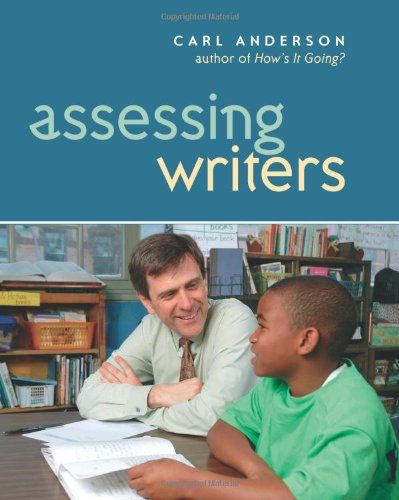
Carl Anderson, author of "Assessing Writers," says that he thinks teachers should assess writers using 6 components: communication of meaning, use of genre knowledge, structure of writing, writing with detail, voice, and conventions. I would agree with most, if not all, of these writing traits, especially meaning and voice. I believe that creating meaning through writing is the MOST important aspect of writing. If there is no meaning, there is no story. No message for the audience to understand. Voice is also important in a writing piece. You want your students to use their thoughts, feelings, and experiences to create a piece that not only has meaning, but is meaningful to them. If a student has no interest in writing about a certain topic, they aren't going to put much effort into making it theirs.
The way that students communicate meaning is using their knowledge of the genre, the structure of writing, and writing with detail. My lesson that I plan on giving to my 2nd grade class is a writing assignment where they will write a fiction story with a problem and solution. My students need to understand what a fiction story is and how they are written in order to write a fiction story. If they don't understand what is involved with the genre, they can't write it. Simple as that. For example, if a person were asked to put together an engine, but knows nothing about how an engine works or how to put it together, how can you expect that person to put the engine together correctly? That's why it is important for the teacher to make sure students understand the genre and structure of writing before having the students write a story. This can be done through mini lessons and group discussions.
An additional component to communicate meaning through writing is writing with detail. Without details, the reader doesn't get the whole meaning of what the author is trying to convey. For example, "the dog sat outside" is a pretty basic sentence that doesn't have much detail, but "the golden retriever sat outside under the big oak tree to hide from the blazing sun" is a much more descriptive sentence that allows that reader to get a better idea of what the author is writing about. The first sentence could be about any dog in any outdoor setting, whereas the second sentence tells the reader that the dog is a golden retriever and the setting is under an oak tree because it's hot outside. Giving examples like this, as well as using books that the students are reading, shows how authors use details in their story. It also shows authors that details get their readers engaged with the story.
So back to my original question. If teachers are marking up a writing piece because the student isn't writing with correct punctuation or their sentences are grammatically incorrect, is that showing them how to become a better writer? The answer is no. Because grammar and punctuation, although important, are not the most important aspects of writing. I would much rather have a student write a detailed story with a beginning, middle, and end with spelling and grammatical mistakes, than write a short story with little detail because the students were too afraid of spelling something wrong or making a sentence that's grammatically incorrect.
Everyone has experienced the terror of the red inked pen and that gut wrenching feeling you get when you see your writing ripped to shreds by your teacher corrections. Your hard work scribbled over and through because it didn't meet the grammatical standards or quality of work that you thought you had achieved. Imagine constantly getting your work handed back to you drenched in red ink. Would you even want to try to improve your writing or do it at all if you were constantly being told that your writing pieces were not up to par?
During the past few weeks I've been thinking about improving writers and how teachers assess students' writing pieces. How much of the assessment should be based on meaning? Grammar? Punctuation? Should grammar or punctuation even be in the assessment when assessing improving writers?
Carl Anderson, author of "Assessing Writers," says that he thinks teachers should assess writers using 6 components: communication of meaning, use of genre knowledge, structure of writing, writing with detail, voice, and conventions. I would agree with most, if not all, of these writing traits, especially meaning and voice. I believe that creating meaning through writing is the MOST important aspect of writing. If there is no meaning, there is no story. No message for the audience to understand. Voice is also important in a writing piece. You want your students to use their thoughts, feelings, and experiences to create a piece that not only has meaning, but is meaningful to them. If a student has no interest in writing about a certain topic, they aren't going to put much effort into making it theirs.
The way that students communicate meaning is using their knowledge of the genre, the structure of writing, and writing with detail. My lesson that I plan on giving to my 2nd grade class is a writing assignment where they will write a fiction story with a problem and solution. My students need to understand what a fiction story is and how they are written in order to write a fiction story. If they don't understand what is involved with the genre, they can't write it. Simple as that. For example, if a person were asked to put together an engine, but knows nothing about how an engine works or how to put it together, how can you expect that person to put the engine together correctly? That's why it is important for the teacher to make sure students understand the genre and structure of writing before having the students write a story. This can be done through mini lessons and group discussions.
An additional component to communicate meaning through writing is writing with detail. Without details, the reader doesn't get the whole meaning of what the author is trying to convey. For example, "the dog sat outside" is a pretty basic sentence that doesn't have much detail, but "the golden retriever sat outside under the big oak tree to hide from the blazing sun" is a much more descriptive sentence that allows that reader to get a better idea of what the author is writing about. The first sentence could be about any dog in any outdoor setting, whereas the second sentence tells the reader that the dog is a golden retriever and the setting is under an oak tree because it's hot outside. Giving examples like this, as well as using books that the students are reading, shows how authors use details in their story. It also shows authors that details get their readers engaged with the story.
So back to my original question. If teachers are marking up a writing piece because the student isn't writing with correct punctuation or their sentences are grammatically incorrect, is that showing them how to become a better writer? The answer is no. Because grammar and punctuation, although important, are not the most important aspects of writing. I would much rather have a student write a detailed story with a beginning, middle, and end with spelling and grammatical mistakes, than write a short story with little detail because the students were too afraid of spelling something wrong or making a sentence that's grammatically incorrect.
Sunday, March 9, 2014
Think Aloud with Annie's Pet
This past week was the first time I did a think aloud with a student in my 2nd grade practicum class and I was a little nervous at first, but it turned out pretty well. The student I worked with read the short story "Annie's Pet," by Barbara Brenner (http://www.scholastic.com/teachers/book/annies-pet#cart/cleanup). It's a cute little story about a girl who is given $5 for her birthday and she decides she wants to buy a pet. As the story progresses, Annie starts purchasing items with the $5 that she has, while also visiting different places to look for the perfect pet. The book is pretty short, I would say about 25-30 pages, so I was worried that my student (let's called her Mazie) wouldn't be able to get the chance to give a lot of input for the think aloud, but we made it work.
Like I said, I've never really done a think aloud with a student before, even though pretty much all of my literacy courses have discussed the benefits of think alouds and how to do it with a class. Because I didn't want to overwhelm Mazie with everything that could go into a think aloud, I just had her focus on predicting and character thoughts/emotions. I obviously wanted to model a little before I made her do it herself, so I read the first couple of pages and made some predicts out loud as to what animal I thought Annie was going to buy. She was at a zoo and was told by her father that she shouldn't get too big of an animal because it wouldn't be able to fit in the house, her mother told her not to get too small of an animal, and her brother told her not to get to wild of an animal and the illustrations showed a lion roaring. I thought out loud to myself animals that weren't too big, too small, and weren't super wild, and I came up with a monkey. I haven't personally done many think alouds with myself, so my modeling felt slightly forced, but I feel like if I did it more often I would just get used to pausing and talking about what I read. I was worried my modeling wasn't good enough, so I decided to do a little guided practice with Mazie to see what she understood about what to do for a think aloud.
After my attempt at modeling, we did a guided think aloud. The scene was Annie walking around looking for a pet and she comes across a girl with a bird, which gives Annie an idea. I asked Mazie what she thought Annie's idea was. She sat there for a few seconds, then she said that she thought Annie was going to buy a bird. As we read on, it turns out Annie didn't buy a bird because they bird she wanted already had an owner. At this point, I'm not sure if Mazie completely understands what a think aloud is, but I proceed to let her attempt it by herself. I remind her to make predictions during the rest of the story and I let her go.
The independent think aloud went very well and Mazie made predictions before I even realized what Annie was doing. Mazie also made a few comments that made me realize that she was following the story with great detail. Annie bought items throughout the book, which were a ball, collar, bowl and leash, and an ice cream cone. Each in that order and all being a total of $5. After Annie bought the ball and collar, Mazie made the prediction that Annie was buying a dog, where as I was thinking she was buying items to donate to the zoo. When Annie used her last dollar, Mazie shouted out that she was out of money and was wondering how she was going to afford buying the dog! I was curious if she would realize Annie was now out of money and she definitely did. I was surprised she was that shocked that Annie no longer had enough money to afford a pet. It was precious and made my day. Anyways, Mazie also made a comment about maybe the dogs were free. She was kind of right! The dogs Annie originally saw were at a pet store, but later Annie stumbled across an animal shelter and was able to adopt a dog for free.
I ended up enjoying the think aloud more than expected! I thought it might interrupt the flow of reading the book, but I think it made everything more clear for Mazie. By thinking out loud, she was able to verbally address questions and make predictions, and I was able to see what she was thinking. I would definitely love to do this with a small group and even large group. I was a little skeptical at first, but being able to actually doing it with a student helped me see the benefits of think alouds and how it doesn't really affect the flow of the story like I thought it would.
Sunday, March 2, 2014
Pintrest Inquiry
I think I've decided to pursue best practices of research based reading as my Pintrest inquiry. Over the years literacy has become a huge focus in the education world because reading is so vital to being a part of and succeeding in society. A large portion of research has been done on various reading techniques and literacy makes up a great piece of the Common Core standards, so as a teacher it is important to learn about various reading practices, preferably researched based, and decide whether or not these practices are right for your teaching style.
As a teacher, you need to understand that not every child learns the same, therefore there is no single method of teaching reading that will work for all students. It is our job as teachers to help our students be the best learners they could be, so we must be educated on reading techniques that will work for various types of students. By learning these research based methods and understanding how each of our students learns best, it is highly probable to improve the likelihood that our students will be successful readers.
Being in the University of Iowa's Education program as given me the opportunity to collect various books and other readings about reading strategies that I would like to discuss, research, and share with others. I have also kept in touch with past literacy professors that I would like to talk to to get ideas for reading research I can find on the university's online database. I have had the opportunity to read books written by Debbie Miller and I have absolutely fallen in love with her practices, so I would like to look into her practices a little more and maybe authors that are considered to be relatable to hers. I hope to find interesting, purposeful, and successful strategies that teachers can try and use in their classrooms.
As a teacher, you need to understand that not every child learns the same, therefore there is no single method of teaching reading that will work for all students. It is our job as teachers to help our students be the best learners they could be, so we must be educated on reading techniques that will work for various types of students. By learning these research based methods and understanding how each of our students learns best, it is highly probable to improve the likelihood that our students will be successful readers.
Being in the University of Iowa's Education program as given me the opportunity to collect various books and other readings about reading strategies that I would like to discuss, research, and share with others. I have also kept in touch with past literacy professors that I would like to talk to to get ideas for reading research I can find on the university's online database. I have had the opportunity to read books written by Debbie Miller and I have absolutely fallen in love with her practices, so I would like to look into her practices a little more and maybe authors that are considered to be relatable to hers. I hope to find interesting, purposeful, and successful strategies that teachers can try and use in their classrooms.
Subscribe to:
Posts (Atom)