Everyone has experienced the terror of the red inked pen and that gut wrenching feeling you get when you see your writing ripped to shreds by your teacher corrections. Your hard work scribbled over and through because it didn't meet the grammatical standards or quality of work that you thought you had achieved. Imagine constantly getting your work handed back to you drenched in red ink. Would you even want to try to improve your writing or do it at all if you were constantly being told that your writing pieces were not up to par?
During the past few weeks I've been thinking about improving writers and how teachers assess students' writing pieces. How much of the assessment should be based on meaning? Grammar? Punctuation? Should grammar or punctuation even be in the assessment when assessing improving writers?
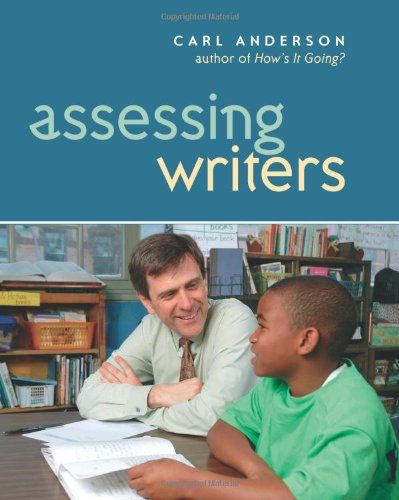
Carl Anderson, author of "Assessing Writers," says that he thinks teachers should assess writers using 6 components: communication of meaning, use of genre knowledge, structure of writing, writing with detail, voice, and conventions. I would agree with most, if not all, of these writing traits, especially meaning and voice. I believe that creating meaning through writing is the MOST important aspect of writing. If there is no meaning, there is no story. No message for the audience to understand. Voice is also important in a writing piece. You want your students to use their thoughts, feelings, and experiences to create a piece that not only has meaning, but is meaningful to them. If a student has no interest in writing about a certain topic, they aren't going to put much effort into making it theirs.
The way that students communicate meaning is using their knowledge of the genre, the structure of writing, and writing with detail. My lesson that I plan on giving to my 2nd grade class is a writing assignment where they will write a fiction story with a problem and solution. My students need to understand what a fiction story is and how they are written in order to write a fiction story. If they don't understand what is involved with the genre, they can't write it. Simple as that. For example, if a person were asked to put together an engine, but knows nothing about how an engine works or how to put it together, how can you expect that person to put the engine together correctly? That's why it is important for the teacher to make sure students understand the genre and structure of writing before having the students write a story. This can be done through mini lessons and group discussions.
An additional component to communicate meaning through writing is writing with detail. Without details, the reader doesn't get the whole meaning of what the author is trying to convey. For example, "the dog sat outside" is a pretty basic sentence that doesn't have much detail, but "the golden retriever sat outside under the big oak tree to hide from the blazing sun" is a much more descriptive sentence that allows that reader to get a better idea of what the author is writing about. The first sentence could be about any dog in any outdoor setting, whereas the second sentence tells the reader that the dog is a golden retriever and the setting is under an oak tree because it's hot outside. Giving examples like this, as well as using books that the students are reading, shows how authors use details in their story. It also shows authors that details get their readers engaged with the story.
So back to my original question. If teachers are marking up a writing piece because the student isn't writing with correct punctuation or their sentences are grammatically incorrect, is that showing them how to become a better writer? The answer is no. Because grammar and punctuation, although important, are not the most important aspects of writing. I would much rather have a student write a detailed story with a beginning, middle, and end with spelling and grammatical mistakes, than write a short story with little detail because the students were too afraid of spelling something wrong or making a sentence that's grammatically incorrect.

No comments:
Post a Comment