Sunday, March 30, 2014

Assessing Writing of Improving Writers

     Incorrect. Red ink. Scribbles. Corrections.

     Everyone has experienced the terror of the red inked pen and that gut wrenching feeling you get when you see your writing ripped to shreds by your teacher corrections. Your hard work scribbled over and through because it didn't meet the grammatical standards or quality of work that you thought you had achieved. Imagine constantly getting your work handed back to you drenched in red ink. Would you even want to try to improve your writing or do it at all if you were constantly being told that your writing pieces were not up to par?
     During the past few weeks I've been thinking about improving writers and how teachers assess students' writing pieces. How much of the assessment should be based on meaning? Grammar? Punctuation? Should grammar or punctuation even be in the assessment when assessing improving writers?
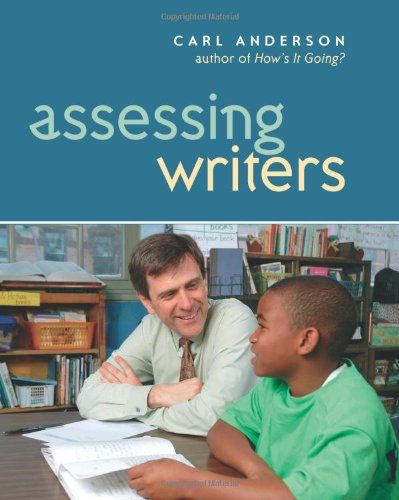
     Carl Anderson, author of "Assessing Writers," says that he thinks teachers should assess writers using 6 components: communication of meaning, use of genre knowledge, structure of writing, writing with detail, voice, and conventions. I would agree with most, if not all, of these writing traits, especially meaning and voice. I believe that creating meaning through writing is the MOST important aspect of writing. If there is no meaning, there is no story. No message for the audience to understand. Voice is also important in a writing piece. You want your students to use their thoughts, feelings, and experiences to create a piece that not only has meaning, but is meaningful to them. If a student has no interest in writing about a certain topic, they aren't going to put much effort into making it theirs.
     The way that students communicate meaning is using their knowledge of the genre, the structure of writing, and writing with detail. My lesson that I plan on giving to my 2nd grade class is a writing assignment where they will write a fiction story with a problem and solution. My students need to understand what a fiction story is and how they are written in order to write a fiction story. If they don't understand what is involved with the genre, they can't write it. Simple as that. For example, if a person were asked to put together an engine, but knows nothing about how an engine works or how to put it together, how can you expect that person to put the engine together correctly? That's why it is important for the teacher to make sure students understand the genre and structure of writing before having the students write a story. This can be done through mini lessons and group discussions.
     An additional component to communicate meaning through writing is writing with detail. Without details, the reader doesn't get the whole meaning of what the author is trying to convey. For example, "the dog sat outside" is a pretty basic sentence that doesn't have much detail, but "the golden retriever sat outside under the big oak tree to hide from the blazing sun" is a much more descriptive sentence that allows that reader to get a better idea of what the author is writing about. The first sentence could be about any dog in any outdoor setting, whereas the second sentence tells the reader that the dog is a golden retriever and the setting is under an oak tree because it's hot outside. Giving examples like this, as well as using books that the students are reading, shows how authors use details in their story. It also shows authors that details get their readers engaged with the story.
     So back to my original question. If teachers are marking up a writing piece because the student isn't writing with correct punctuation or their sentences are grammatically incorrect, is that showing them how to become a better writer? The answer is no. Because grammar and punctuation, although important, are not the most important aspects of writing. I would much rather have a student write a detailed story with a beginning, middle, and end with spelling and grammatical mistakes, than write a short story with little detail because the students were too afraid of spelling something wrong or making a sentence that's grammatically incorrect.

Sunday, March 9, 2014

Think Aloud with Annie's Pet


     This past week was the first time I did a think aloud with a student in my 2nd grade practicum class and I was a little nervous at first, but it turned out pretty well. The student I worked with read the short story "Annie's Pet," by Barbara Brenner (http://www.scholastic.com/teachers/book/annies-pet#cart/cleanup). It's a cute little story about a girl who is given $5 for her birthday and she decides she wants to buy a pet. As the story progresses, Annie starts purchasing items with the $5 that she has, while also visiting different places to look for the perfect pet. The book is pretty short, I would say about 25-30 pages, so I was worried that my student (let's called her Mazie) wouldn't be able to get the chance to give a lot of input for the think aloud, but we made it work.
   
     Like I said, I've never really done a think aloud with a student before, even though pretty much all of my literacy courses have discussed the benefits of think alouds and how to do it with a class. Because I didn't want to overwhelm Mazie with everything that could go into a think aloud, I just had her focus on predicting and character thoughts/emotions. I obviously wanted to model a little before I made her do it herself, so I read the first couple of pages and made some predicts out loud as to what animal I thought Annie was going to buy. She was at a zoo and was told by her father that she shouldn't get too big of an animal because it wouldn't be able to fit in the house, her mother told her not to get too small of an animal, and her brother told her not to get to wild of an animal and the illustrations showed a lion roaring. I thought out loud to myself animals that weren't too big, too small, and weren't super wild, and I came up with a monkey. I haven't personally done many think alouds with myself, so my modeling felt slightly forced, but I feel like if I did it more often I would just get used to pausing and talking about what I read. I was worried my modeling wasn't good enough, so I decided to do a little guided practice with Mazie to see what she understood about what to do for a think aloud.

     After my attempt at modeling, we did a guided think aloud. The scene was Annie walking around looking for a pet and she comes across a girl with a bird, which gives Annie an idea. I asked Mazie what she thought Annie's idea was. She sat there for a few seconds, then she said that she thought Annie was going to buy a bird. As we read on, it turns out Annie didn't buy a bird because they bird she wanted already had an owner. At this point, I'm not sure if Mazie completely understands what a think aloud is, but I proceed to let her attempt it by herself. I remind her to make predictions during the rest of the story and I let her go.

    The independent think aloud went very well and Mazie made predictions before I even realized what Annie was doing. Mazie also made a few comments that made me realize that she was following the story with great detail. Annie bought items throughout the book, which were a ball, collar, bowl and leash, and an ice cream cone. Each in that order and all being a total of $5. After Annie bought the ball and collar, Mazie made the prediction that Annie was buying a dog, where as I was thinking she was buying items to donate to the zoo. When Annie used her last dollar, Mazie shouted out that she was out of money and was wondering how she was going to afford buying the dog! I was curious if she would realize Annie was now out of money and she definitely did. I was surprised she was that shocked that Annie no longer had enough money to afford a pet. It was precious and made my day. Anyways, Mazie also made a comment about maybe the dogs were free. She was kind of right! The dogs Annie originally saw were at a pet store, but later Annie stumbled across an animal shelter and was able to adopt a dog for free.

     I ended up enjoying the think aloud more than expected! I thought it might interrupt the flow of reading the book, but I think it made everything more clear for Mazie. By thinking out loud, she was able to verbally address questions and make predictions, and I was able to see what she was thinking. I would definitely love to do this with a small group and even large group. I was a little skeptical at first, but being able to actually doing it with a student helped me see the benefits of think alouds and how it doesn't really affect the flow of the story like I thought it would.
   

Sunday, March 2, 2014

Pintrest Inquiry

     I think I've decided to pursue best practices of research based reading as my Pintrest inquiry. Over the years literacy has become a huge focus in the education world because reading is so vital to being a part of and succeeding in society. A large portion of research has been done on various reading techniques and literacy makes up a great piece of the Common Core standards, so as a teacher it is important to learn about various reading practices, preferably researched based, and decide whether or not these practices are right for your teaching style.

     As a teacher, you need to understand that not every child learns the same, therefore there is no single method of teaching reading that will work for all students. It is our job as teachers to help our students be the best learners they could be, so we must be educated on reading techniques that will work for various types of students. By learning these research based methods and understanding how each of our students learns best, it is highly probable to improve the likelihood that our students will be successful readers.

     Being in the University of Iowa's Education program as given me the opportunity to collect various books and other readings about reading strategies that I would like to discuss, research, and share with others. I have also kept in touch with past literacy professors that I would like to talk to to get ideas for reading research I can find on the university's online database. I have had the opportunity to read books written by Debbie Miller and I have absolutely fallen in love with her practices, so I would like to look into her practices a little more and maybe authors that are considered to be relatable to hers. I hope to find interesting, purposeful, and successful strategies that teachers can try and use in their classrooms.